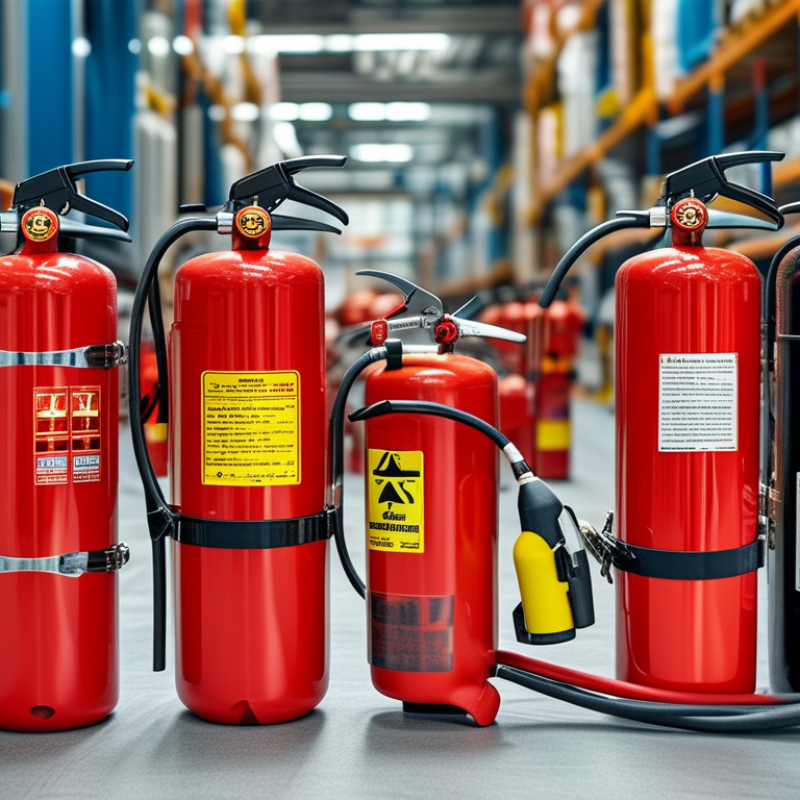
| Portable Dry Chemical Extinguishers |
Class A, B and C risks, depending on agent formulation; suitable for general commercial, industrial and utility areas. |
ABC powder
Stored-pressure or cartridge-operated
Common capacities: 1–12 kg
Fire rating must be selected according to the tested rating, not only the agent mass. Powder may reduce visibility and can damage sensitive electronics.
|
ISO 7165 for portable extinguisher performance and construction;
ISO 11602-1 for selection and installation;
ISO 11602-2 for inspection and maintenance;
EN 3 in applicable European markets;
UL 299 and UL 711 may apply to products evaluated for the North American market.
|
CE marking is not a universal requirement for every extinguisher. It may apply when another applicable EU legislation requires it. Pressure equipment obligations depend on design, filling pressure and jurisdiction. UL certification or listing is market- and product-specific and should be verified in the applicable certification directory.
|
Routine visual inspection; pressure, seal, hose and gauge checks; recharge after discharge; periodic internal examination and hydrostatic testing according to the applicable standard, national law and manufacturer instructions.
|
Confirm fire classification, tested rating, operating temperature range, corrosion protection, mounting hardware, language of instructions, spare-part availability and local service capability.
|
| Carbon Dioxide Extinguishers |
Flammable-liquid and energized-electrical equipment risks in server rooms, laboratories, control panels and workshops. |
Class B
Electrical equipment
No powder residue
CO₂ is not generally suitable for deep-seated Class A fires and may create an asphyxiation hazard in confined spaces.
|
ISO 7165 and ISO 11602 series where applicable;
EN 3 requirements for relevant European products;
UL 154 may be relevant for certain portable carbon-dioxide extinguishers in North America.
|
Confirm pressure-vessel conformity, valve and hose requirements, discharge-horn design, labeling and local rules for pressure receptacles. CE status must be assessed against the specific EU legislation applicable to the complete product.
|
Inspect cylinder condition, valve, horn, tamper seal and mass. Weight checks are important because CO₂ units may not have a conventional pressure gauge. Hydrostatic testing intervals are jurisdiction-specific.
|
Avoid placing in unventilated occupied spaces without a suitable risk assessment. Check electrical compatibility, cold-weather performance, cylinder test date, transport classification and refill infrastructure.
|
| Water and Water-Mist Extinguishers |
Class A materials such as paper, textiles, wood and ordinary combustibles. Water mist can be designed for a broader range, subject to its test approval. |
Low residue
Class A focus
Mist droplet performance varies
Standard water must not be used on energized electrical equipment unless the product is specifically tested and labeled for that use.
|
ISO 7165 and ISO 11602 series where applicable;
EN 3 for relevant European portable extinguishers;
UL 711 rating methodology may be relevant where North American listing is required.
|
Verify the exact tested fire classes and electrical-clearance limitations. CE marking is not automatically required merely because a product is sold in Europe; the applicable conformity legislation must be identified.
|
Check leakage, corrosion, hose, nozzle, pressure indicator and freeze protection. Water-based agents may require temperature-controlled storage and periodic recharge or replacement.
|
Specify additive type, freezing point, electrical-use limitations, corrosion resistance, wall bracket, maximum travel distance to the hazard and local refill arrangements.
|
| Foam Extinguishers |
Class A and Class B risks, including ordinary combustibles and selected flammable-liquid hazards. |
AFFF or fluorine-free foam
Surface-sealing action
Performance depends on foam formulation and the specific fire test. Environmental restrictions may apply to certain fluorinated substances.
|
ISO 7165 and ISO 11602 series where applicable;
EN 3 for applicable European products;
UL 711 and relevant agent or product evaluations for North American markets.
|
Confirm chemical composition, restricted-substance status, disposal obligations and destination-market labeling. A CE mark alone does not establish fire-performance approval.
|
Inspect concentration, contamination, corrosion, pressure and hose condition. Foam concentrate may have a defined storage life and may require laboratory or manufacturer checks.
|
Request the fire-test report, foam type, fluorine status, environmental documentation, compatibility with the hazard, cold-temperature rating and disposal procedure.
|
| Wet-Chemical Kitchen Extinguishers |
Commercial cooking appliances, deep-fat fryers and cooking-oil or cooking-fat fires. |
Class K / Class F
Low-pressure application
Re-ignition control required
Correct nozzle geometry and agent quantity are essential; water must not be applied directly to burning cooking oil.
|
EN 3 classifications where applicable;
UL 300 for commercial cooking fire-extinguishing systems and related tested applications;
Local fire codes and commercial-kitchen standards must also be checked.
|
Do not treat a general CE declaration as proof of kitchen-fire performance. Confirm the product’s tested cooking-oil rating and any required listing or approval for the destination market.
|
Inspect nozzle, hose, tamper seal, pressure and agent condition. Fixed kitchen systems require scheduled inspection, functional testing and replacement or servicing of fusible links and detection components.
|
Match the extinguisher or system to fryer type, oil quantity, hood configuration, cooking appliances, local code, trained-user procedures and post-discharge cleaning requirements.
|
| Automatic Fire Detection and Alarm Systems |
Early warning for offices, warehouses, hotels, residential buildings, industrial facilities and infrastructure. |
Smoke detection
Heat detection
Manual call points
Audible and visual notification
System design must address coverage, false alarms, alarm audibility, standby power and integration with emergency procedures.
|
ISO 7240 series for fire detection and alarm system components and functions;
EN 54 series in many European markets;
UL 268, UL 864 and related standards may apply to North American equipment, depending on the component.
|
CE marking may be required for applicable electrical, electromagnetic-compatibility and construction-product legislation. UL listing is component- and system-specific; mixing unapproved components can invalidate the system approval.
|
Routine inspection, alarm simulation, detector testing, battery capacity testing, fault monitoring and documented annual servicing. Dust, humidity and temperature effects should be assessed.
|
Specify addressable or conventional architecture, communication protocol, battery autonomy, environmental rating, event logging, integration interfaces, spare detectors and local commissioning support.
|
| Fixed Automatic Sprinkler Systems |
Warehouses, factories, commercial buildings, residential facilities and high-rack storage where automatic suppression is required. |
Wet pipe
Dry pipe
Pre-action
Deluge
Hydraulic design depends on hazard classification, storage height, commodity, density, area of operation, water supply and ambient temperature.
|
ISO 6182 series for certain sprinkler-system components;
EN 12259 series for European sprinkler components;
NFPA 13 is widely used for installation design;
UL 199 and other component standards may apply in North America.
|
Verify component approvals, compatibility and installation design. CE marking of individual components does not replace the required system design, installation acceptance and local authority approval.
|
Inspect valves, water pressure, alarm devices, sprinklers, pipework, pumps and water storage. Flow tests and periodic inspections must follow the adopted code and authority requirements.
|
Provide hazard classification, storage layout, ceiling height, rack arrangement, commodity data, water-supply curve, seismic requirements, spare sprinkler heads and qualified installation documentation.
|
| Clean-Agent Fire Suppression Systems |
Data centers, control rooms, telecommunications areas, archives and other spaces containing sensitive equipment where residue-free suppression is important. |
Gaseous agent
Residue-free
Requires enclosure integrity
Design must consider agent concentration, discharge time, room volume, pressure relief, occupant safety and environmental impact.
|
ISO 14520 series for gaseous fire-extinguishing systems;
EN 15004 series in applicable European markets;
NFPA 2001 is widely used for clean-agent system design;
UL 2166 and related component standards may apply to certain systems.
|
Verify agent approval, cylinder and valve conformity, pressure-equipment compliance, electrical compatibility and system listing. CE requirements depend on the specific equipment and applicable EU legislation.
|
Inspect cylinders, pressure, nozzles, detection, abort switches, alarms, room integrity and releasing circuits. Enclosure integrity testing is required at defined intervals and after major building changes.
|
Confirm agent type, minimum design concentration, room leakage, pressure-relief venting, occupant exposure limits, cylinder logistics, environmental reporting and trained commissioning personnel.
|
| Fire Hoses, Hose Reels and Hydrants |
First-response firefighting in commercial, industrial, public and residential buildings, subject to local system design. |
Manual firefighting
Water delivery
Building infrastructure
Required flow, pressure, hose length, nozzle type and reach depend on the adopted building and fire code.
|
ISO 14557 for fire-fighting hoses;
EN 671 series for fixed hose systems;
EN 694 for semi-rigid fire hoses;
NFPA 14 is widely used for standpipe and hose-system design.
|
Confirm hose, reel, nozzle, valve and cabinet conformity separately where required. CE marking is not a substitute for flow, pressure and installation acceptance testing.
|
Inspect accessibility, hose condition, nozzle, valve, cabinet, signage and leakage. Flow and pressure tests should be documented at the intervals required by the adopted standard and local authority.
|
Specify inlet connection, hose diameter, length, nozzle pattern, operating pressure, cabinet dimensions, corrosion protection, local coupling compatibility and drainage provisions.
|
| Fire Doors, Curtains and Compartmentation Products |
Containment of fire and smoke, protection of escape routes and limitation of fire spread between compartments. |
Fire resistance
Smoke control
Self-closing performance
Ratings are assembly-specific and may include integrity, insulation, smoke leakage, self-closing and durability classifications.
|
ISO 3008 series for fire-resistance testing of door and shutter assemblies;
EN 1634 series for fire-resistance and smoke-control testing;
EN 13501-2 for fire classification in relevant European applications;
UL 10C and related standards may apply in North America.
|
Construction products may require performance assessment and CE marking under applicable European construction-product rules. UL listing or labeling must match the complete tested assembly, including hardware and glazing.
|
Inspect closing force, hinges, latches, seals, glazing, hold-open devices, gaps and damage. Functional inspections should be recorded and performed at the frequency required by local regulations.
|
Request the complete assembly classification, wall type, maximum dimensions, hardware schedule, glazing limits, smoke rating, installation details and evidence of field inspection.
|
| Emergency Lighting and Exit-Sign Systems |
Safe evacuation during power failure, smoke conditions or fire alarm events. |
Escape-route lighting
Open-area lighting
Maintained or non-maintained
Required illuminance, duration, placement and visibility depend on building use and local regulations.
|
ISO 30061 for emergency lighting principles;
EN 1838 for emergency-lighting photometric requirements;
EN 60598-2-22 for emergency luminaires;
IEC 61347 and related electrical standards may apply to control gear.
|
CE marking may be required under applicable EU electrical and electromagnetic-compatibility legislation. UL or other national certification may be required for North American installations.
|
Perform regular function tests, battery-duration tests, indicator checks, luminaire inspections and logbook recording. Battery replacement intervals depend on chemistry, temperature and manufacturer instructions.
|
Confirm rated duration, battery type, self-test function, photometric data, ingress protection, mounting method, operating temperature, replacement-battery availability and local wiring requirements.
|
| Firefighter Personal Protective Equipment |
Thermal, mechanical and visibility hazards faced by professional or trained emergency responders. |
Helmet
Protective clothing
Gloves and footwear
Respiratory protection
Protection levels must be selected for structural firefighting, technical rescue, wildland operations or another defined task.
|
ISO 11999 series for PPE used by firefighters at risk of exposure to high levels of heat and/or flame;
EN 469 for protective clothing for firefighters;
EN 443 for firefighter helmets;
EN 15090 for firefighter footwear;
EN 136 and EN 137 for certain respiratory protective equipment.
|
PPE placed on the EU market generally requires conformity assessment and CE marking under Regulation (EU) 2016/425 when within scope. In North America, applicable certification may include recognized occupational and product standards; verify the exact equipment category.
|
Inspect after every use for contamination, heat damage, cuts, degradation and fit. Follow documented cleaning, decontamination, repair, retirement and periodic inspection procedures.
|
Define task and hazard profile, size range, thermal performance, chemical resistance, ergonomic compatibility, laundering method, certification documents, traceability and replacement policy.
|
| Fire Blankets and Small Containment Covers |
Small cooking fires, clothing fires and limited localized incidents when the product is suitable for the hazard. |
Non-powered equipment
Rapid deployment
Single-use or reusable by design
Fire blankets are not a substitute for evacuation, alarm activation or a correctly selected extinguisher.
|
ISO 11602 guidance may support extinguisher and first-response planning;
EN 1869 is commonly used for fire blankets in relevant European markets;
Additional local product and textile requirements may apply.
|
Confirm the product’s tested application, material composition, dimensions, packaging and labeling. Do not assume CE marking is required or that it proves fire-performance suitability.
|
Check packaging seal, fabric damage, contamination, storage accessibility and deployment instructions. Replace after use or when the manufacturer specifies.
|
Specify blanket size, test application, mounting container, user instructions, kitchen placement, multilingual labels, shelf-life information and disposal or replacement arrangements.
|